
Finite Element Analysis Method
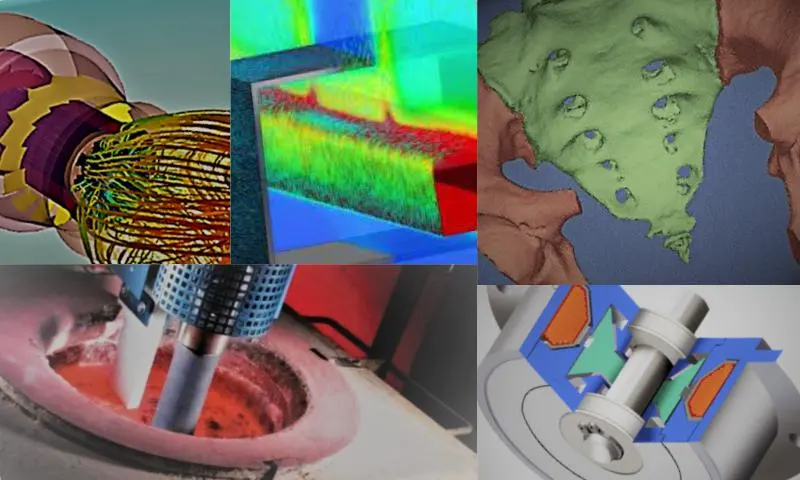
First used in the world in 1956 in the aircraft and aviation sector, the finite element analysis allows even the most complex problems in engineering to be solved with controllable parts. The finite element analysis method, used in many sectors, enables the solution of similar engineering problems in the background. This method, which can be used in many fields from medical applications to biomechanical calculations, is also used in electromagnetic calculations, automotive, mechanical, civil, and aerospace engineering applications, thermal, fluid calculations, and structural analyses.
Principles Used in the Finite Element Analysis Method
In the finite element method, whose basic principle is to go from part to whole, a specific region of two- or three-dimensional structures is taken as a basis. The system, which has a wide application area within the scope of stress analysis, was later applied in the fields of electrical analysis, fluid analysis, and piezoelectric analysis. The systems used in the stress and deformation analysis of bridges also have application areas in buildings and aircraft. Today, the finite element analysis method, which has found its place in the fields of engineering and applied sciences, allows even the most complex problems to be simplified. This system, which provides the solution to the problem divided into parts connected by a large number of nodes, is used for the solution of electrical and mechanical fields, fluid mechanics, heat transfer, and structural mechanics problems.





