
HOW IS THE WEATHER MEASURED?
What are Weather Observations?
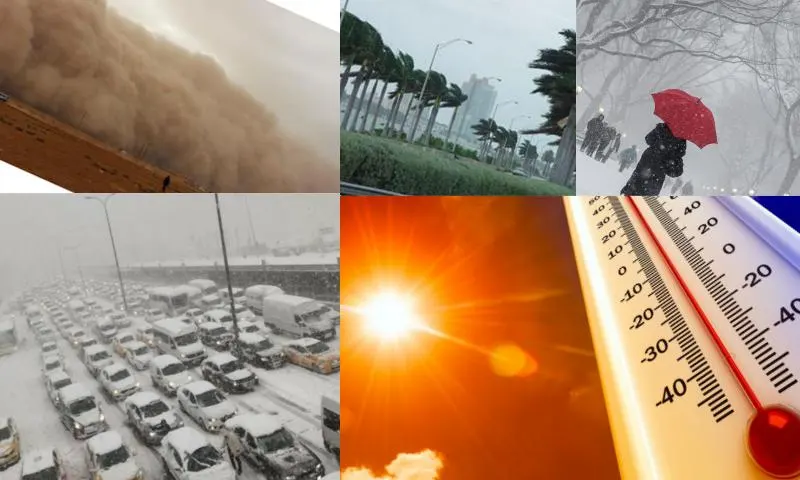
Situations related to the weather concern all segments of society. Meteorological events, which can be observed all over the world, are determined based on specific parameters. Predictions made within the scope of forecasting studies emerge through three different stages. These stages are; observation, prediction, and analysis. In weather conditions, where everything starts with observation, it is possible to benefit from the data of automatic meteorological stations. In addition, satellite images can be used for making predictions. Radar products are another effective method for making weather forecasts. Upper atmosphere observations help to determine the weather condition much more clearly. In addition, predictions are supported by ground observations. Synoptic observations are weather observations made every three hours. With these observations, daily weather forecasts can be made. These forecasts are published on sites like https://www.trthaber.com/hava-durumu.html.
Factors Affecting Weather Observations
Weather observations are divided into two types on an hourly basis: climatological and synoptic. Weather forecasts, which users can access instantly with end-to-end solutions, affect every area of life, from daily life to business life. In ground observations made by experts with the latest technological devices, subjects such as minimum ground temperature, relative vapor and humidity pressure, and wet-bulb thermometer temperature are focused on. Thanks to ground observations, where concepts such as wind gusts, speed, and direction are also important, you can reliably access daily weather information. In weather observations, factors such as visibility distance towards the sea, sea water temperature, and sea state are also taken into consideration to make predictions. In this process, where the total daily precipitation amount is considered, radiation amounts, sunshine, and daily evaporation are also included. Topics such as fresh snow depth, total snow depth, and ground state also provide insight into weather phenomena.





