
What is the Milky Way Galaxy?
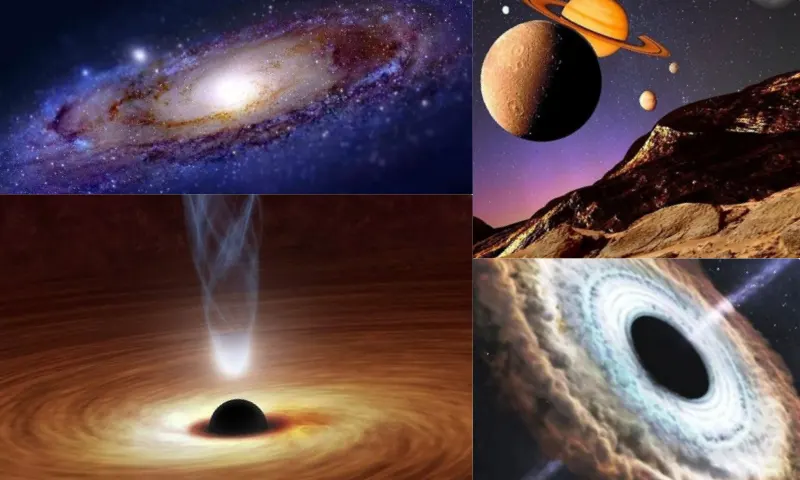
The Milky Way Galaxy is the galaxy in which our Earth is located. Visible from Earth with the naked eye and the largest galaxy in the sky, the Milky Way contains approximately 100 billion stars. The galaxy is located between galaxy clusters and superclusters. The Milky Way Galaxy formed 13.6 billion years ago after the Big Bang. The galaxy, which has a mass of approximately 200 billion suns, has a spiral structure. The galaxy harbors a supermassive black hole at its center, and this black hole controls the movements of stars around the galactic center.
Features of the Milky Way Galaxy
The features of the Milky Way Galaxy include the number of stars, its shape, and its characteristics. There are approximately 100 billion stars in the galaxy. Most of these are located in a region close to the center of the galaxy. The galaxy has a spiral structure and consists of four main arms: Sagittarius, Perseus, Scutum, and Cygnus. The galaxy consists of stars and gas clouds orbiting a supermassive black hole at its center. Additionally, there are stars moving towards the galactic disk and vast clouds of gas and dust. Like other galaxies, the Milky Way Galaxy contains various components, including dark matter and dark energy. The nature and properties of these components are still not fully understood.
Discovery of the Milky Way Galaxy
The Milky Way Galaxy has been observed by humans for thousands of years. However, modern astronomy technologies have been necessary to understand the nature and characteristics of the galaxy. The discovery of the galaxy began in the early 17th century with Galileo Galilei's telescope. Later, in the 18th century, William Herschel studied the galaxy in detail and used the term "galaxy." In the early 20th century, Harlow Shapley studied the distribution of stars to determine the characteristics of the galaxy.





