
Mehmed the Conqueror; An Emperor of the World
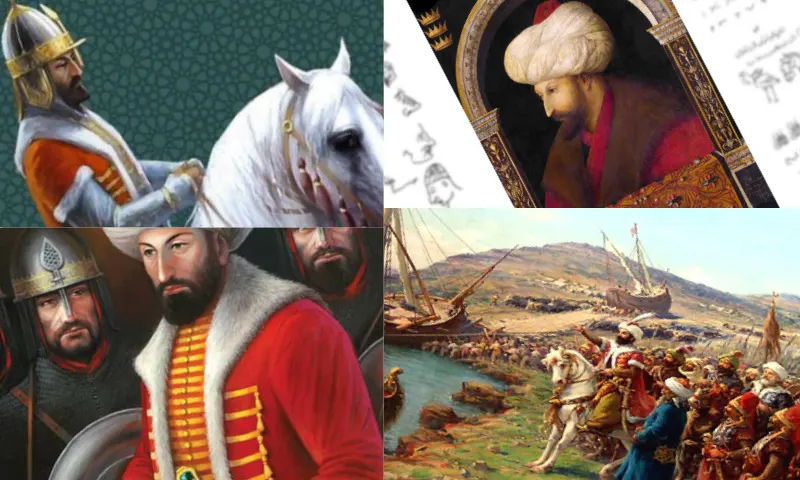
Mehmed the Conqueror was born in Edirne on March 30, 1432. His father was the 6th Ottoman Sultan Murad II, and his mother was Hüma Hatun. Mehmed the Conqueror spent his childhood in Edirne, receiving lessons from private tutors. Mehmed was a very mischievous prince in his childhood. He would not listen to his teacher, Akşemseddin, and would do everything to provoke him. His teacher endured Mehmed's mischief for a long time because he considered complaining to the Sultan to be disrespectful. But one day, Mehmed's mischief became unbearable, and his teacher went to the Sultan. Listening to what happened, Murad II whispered something into Akşemseddin's ear. Although Akşemseddin strongly objected to what he heard, the Great Murad was very serious. One day, while Mehmed was being mischievous during a lesson, his father suddenly entered. The teacher, furious at the Great Murad's unauthorized entry, slapped Murad II. This was actually an order from Murad II to him. Seeing his father being beaten by the teacher, Mehmed never misbehaved again. Thus, he began to be trained to become a great warrior. You can examine related online companies on the internet pages to get information on this subject and ask your questions, and review in detail from here.
The First Reign of Mehmed the Conqueror
Mehmed the Conqueror's first reign began in 1444 when his father abdicated the throne, believing he had secured peace in the east and west. After his father stepped down, Mehmed became Sultan as the eldest Şehzade of the Dynasty at the young age of 12. This reign of Mehmed II lasted only 2 years. Because the Crusaders took advantage of this situation and attacked the Ottoman Empire, everything changed. Çandarlı Halil Pasha wrote a letter to Murad II, asking him to take command of the army and stop the Crusaders. Realizing the seriousness of the situation, the Great Murad stopped the Crusaders with the Battle of Varna, thus securing the safety of Edirne. After winning the war, the Great Murad moved to Manisa again so as not to shake his son's authority. However, Çandarlı Halil Pasha wrote another letter to Murad, stating that Mehmed was not yet capable of being Sultan and asking him to return to the throne. Realizing the unease of the state officials, Murad II exiled his son to Manisa in 1446 and returned to the throne. After ascending the throne, he did not treat his son as he had before. He no longer took him on his wars and conquests. Mehmed lived a semi-exiled life in Manisa. He was forbidden to leave Manisa and come to the capital. However, he did not submit to this exile and had money minted in his name. Furthermore, the Turkish pirates under his command, with his help, attacked Venetian merchant ships. He was already showing signs of becoming a formidable Sultan in the future.
Mehmed the Conqueror's Accession to the Throne
Mehmed the Conqueror's second reign began in 1451, when his father, Murad II, passed away. Following this, Mehmed was summoned to Edirne to become Sultan. Upon returning to the throne, Mehmed II instilled great fear in Çandarlı Halil Pasha, who had caused his dethronement and exile. Furthermore, Çandarlı's opposition to Mehmed continued. However, Mehmed II stated that he did not have time for such matters for the moment, as he had important work to do. Mehmed II's long-held dream was to conquer Istanbul. He now had the power to do so. The Byzantine capital had previously been besieged by his father, grandfather, and great-grandfather Yıldırım Bayezid. However, all these sieges had failed. After taking power, Mehmed the Conqueror began preparations to besiege Istanbul. First, he had Rumeli Hisarı built opposite the Anatolian Hisarı built by Yıldırım Bayezid. He then began to survey the surroundings of Istanbul with his soldiers. All these developments greatly worried Çandarlı Halil Pasha, who believed the state was unprepared for such a conquest. However, Mehmed II did as he pleased and besieged Istanbul by land and sea on April 6, 1453. The Emperor had done everything he could to stop Mehmed. First, he asked for help from the Pope and the Italians, and then he stretched a large chain across the mouth of the Golden Horn, attempting to prevent the Ottoman navy from approaching the city. However, Mehmed had a plan for this situation. Mehmed decided to move ships overland, an unprecedented feat in history. Using strong ropes and cables sent from Tire, they succeeded in moving the ships overland. The Byzantine navy, suddenly finding the Ottoman fleet before them, did not know what to do. Thus, Constantinople was besieged by sea. Another factor contributing to the success of the conquest was the Şahi cannons, Mehmed's own invention. With his superior intelligence and strategy, Mehmed the Conqueror succeeded in conquering Istanbul on May 29, 1453. After capturing the city, Mehmed addressed the Christian population, stating that everyone would continue to live according to their old ways and assuring them that their religion would not be interfered with. With this conquest, Mehmed the Conqueror buried the 1058-year-old Eastern Roman Empire in history. He was now the sole great Sultan of the world. After the conquest, Mehmed the Conqueror had Çandarlı Halil Pasha executed. There was now no one to hinder him. With this immense power, Mehmed the Conqueror conquered Bosnia, Serbia, the Morea peninsula, Crimea, Herzegovina, Amasra, Sinop, Karaman, Trabzon, Wallachia, Moldavia, Albania, and Eastern Anatolia. By conquering Trabzon, he destroyed the Empire of Trebizond. He also fought the Battle of Otlukbeli against the Aq Qoyunlu ruler Uzun Hasan, pushing the Aq Qoyunlu into a process of decline. Mehmed the Conqueror was one of the greatest rulers in Ottoman and world history. In his 30-year reign, he earned the title





